2024
2024
One System, Many Personalities: Designing for Brand Variety at Scale
One System, Many Personalities: Designing for Brand Variety at Scale
Handelnine Global is a growing house of private label brands, each with its own unique identity but a shared commitment to quality and design. Built a scalable, mobile-first design language for a multi-brand ecosystem for these brands.
Scalable Design System
Mobile-first
Overview
As Handelnine Global expanded its portfolio of in-house brands, each grew its own visual style — and with it, a web of inconsistencies.
I led the creation of a unified design system that could scale across brands while allowing each to retain its personality. The result was a flexible, token-based system that streamlined development, improved brand coherence, and accelerated new product launches.
The Challenge
The Challenge
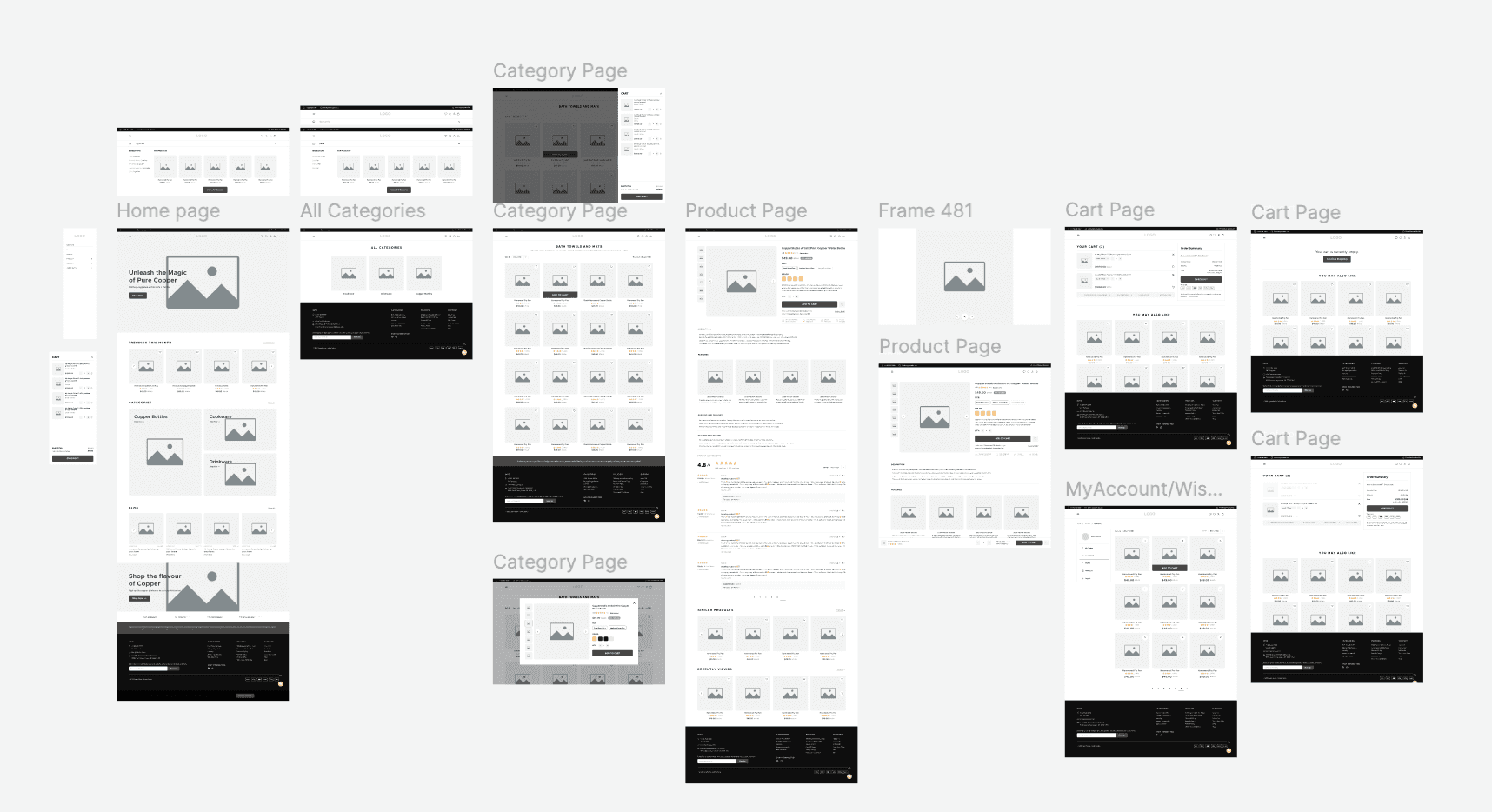
Each brand team had built interfaces independently, resulting in repeated patterns, disconnected color logic, and mismatched typography.
The inconsistency slowed down development and diluted the parent brand’s visual integrity.
The challenge was to create a shared design language that felt unified under one system — yet adaptable enough for brands with contrasting aesthetics.
Goals & Objectives
Goals & Objectives
Consistency
Establish a single, scalable design system for all brands
Flexibility
Design components that can flex across brands without duplication
Mobile-First
Prioritize mobile responsiveness and accessibility
Scalability
Streamline handoffs between design and development teams
Process
Process
Audit
Define Tokens
Build Components
Brand Implementation
I began with a full audit of existing interfaces, analyzing patterns, redundancies, and inconsistencies. From there, I defined a clear hierarchy of foundations → components → brand variants.
The system was built around design tokens to manage color, typography, spacing, and elevation. These tokens acted as the connective tissue, ensuring every brand maintained consistency without feeling identical.
Design Foundations
Design Foundations
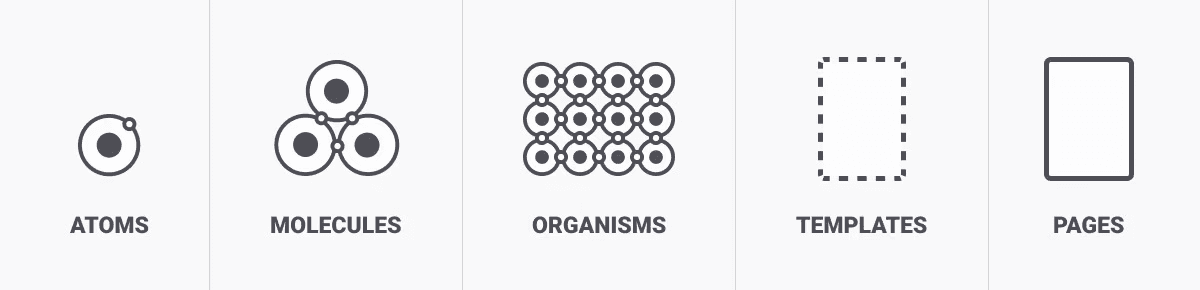
Applying Atomic Design Principles to create components for our system.
The Design System is based on the following set of principles to help designers make informed choices about how to approach a project:
Components and Patterns
Components and Patterns
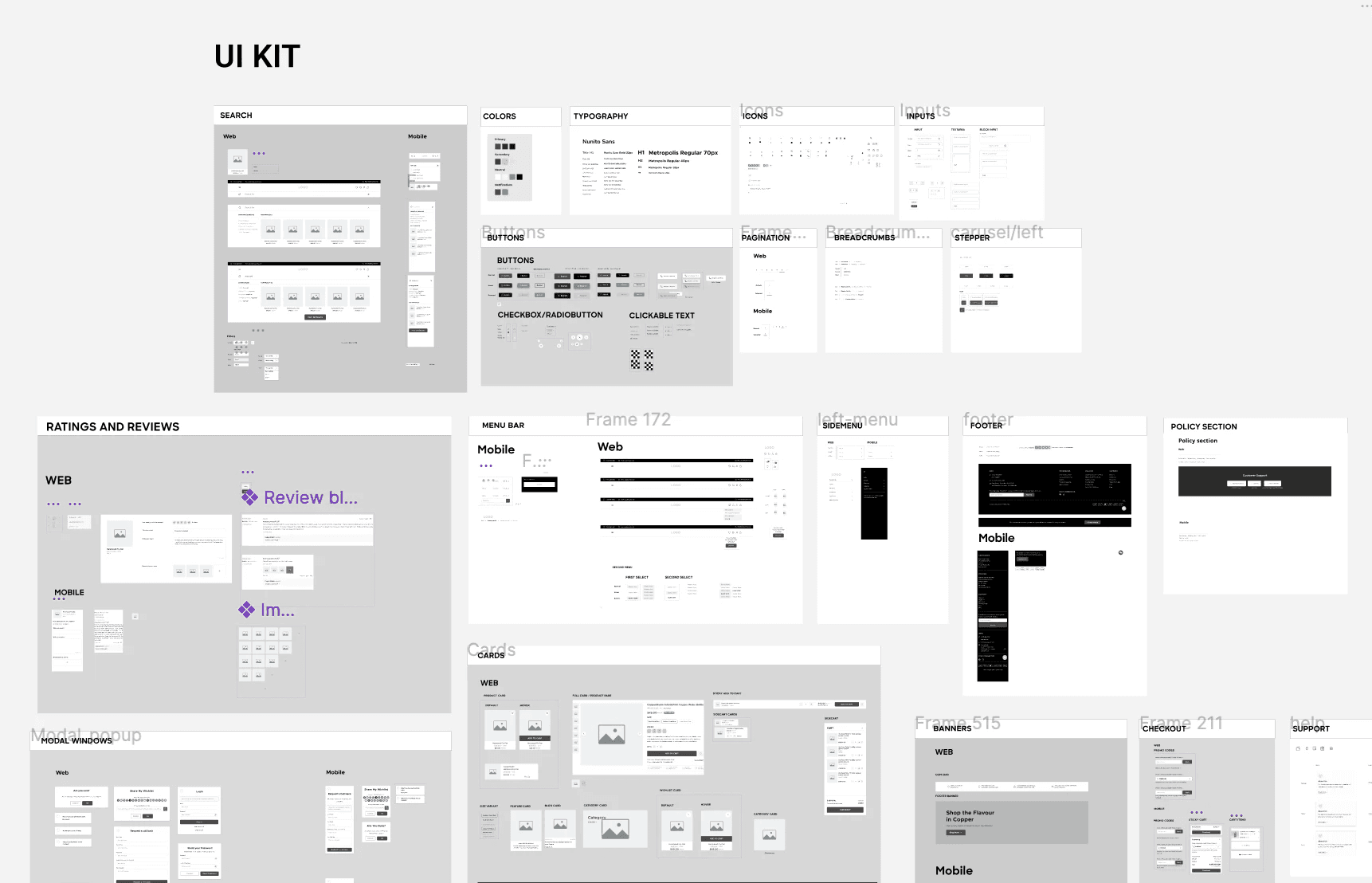
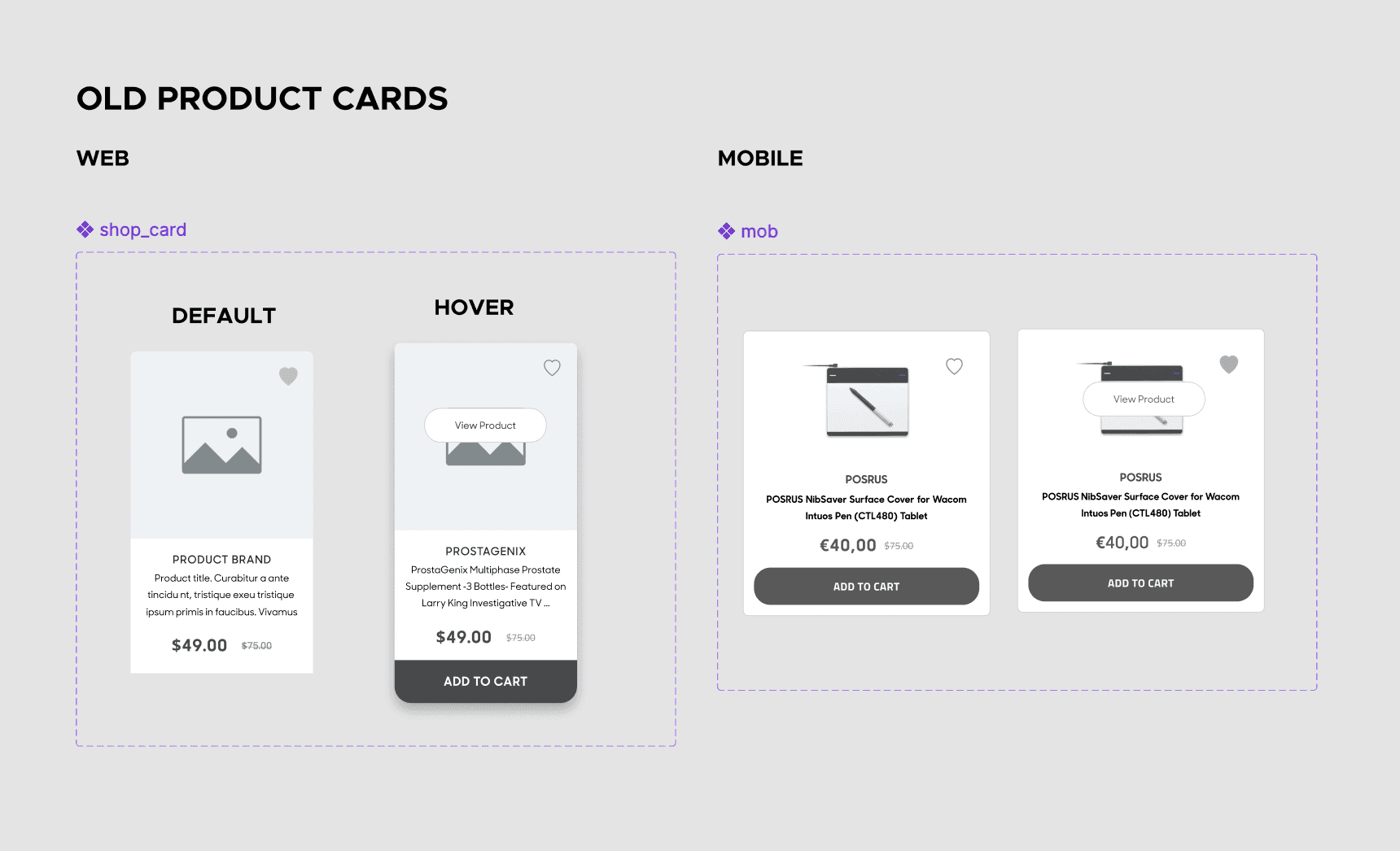
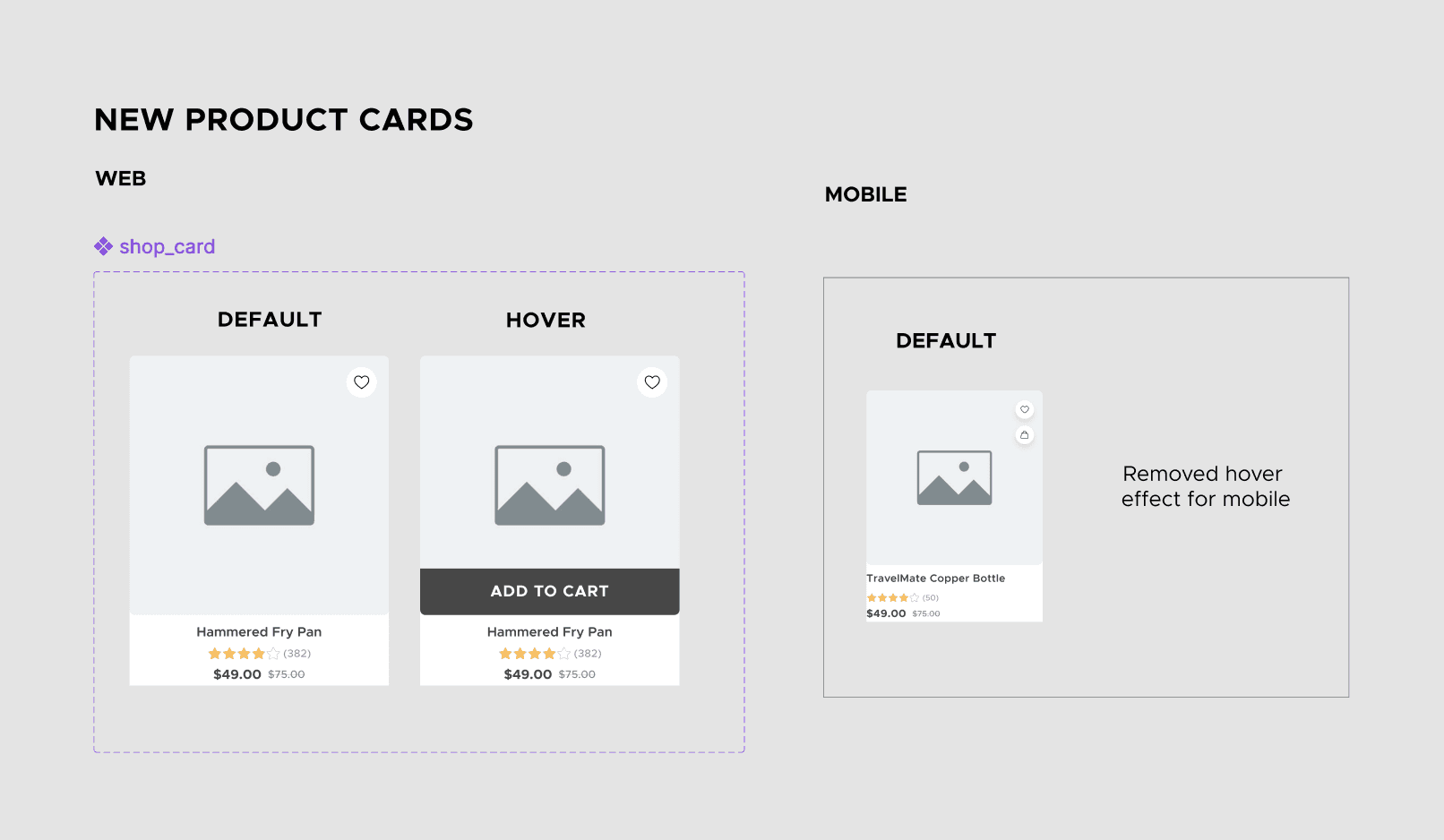
I built out modular components — buttons, forms, navigation, product cards, modals — all governed by the same token logic. Each component was designed to be theme-agnostic, with color and type overridden at the brand level.
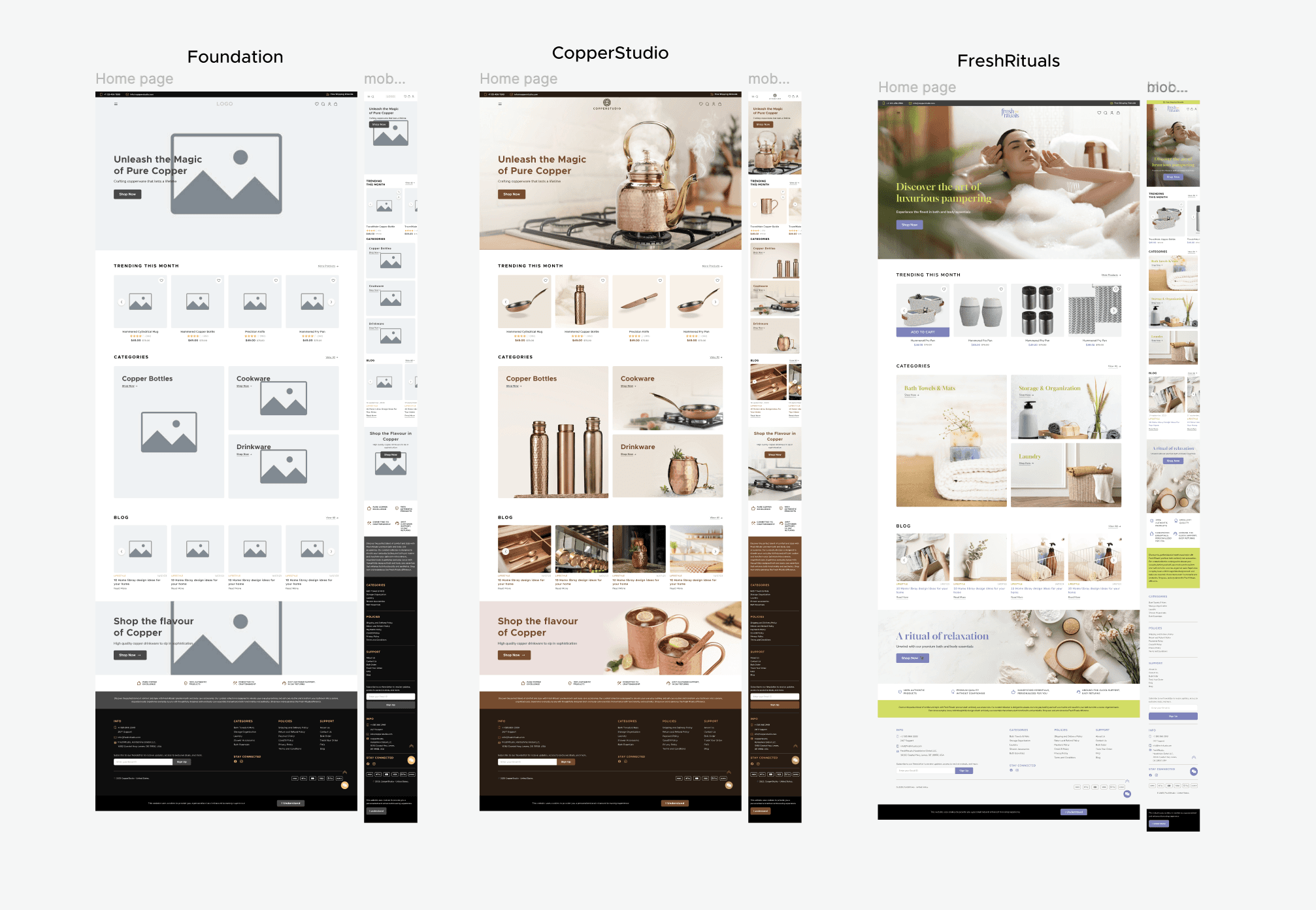
Multiple brands could share identical structural components, yet look entirely distinct through customized palettes and imagery.
Responsive by Design
Responsive by Design
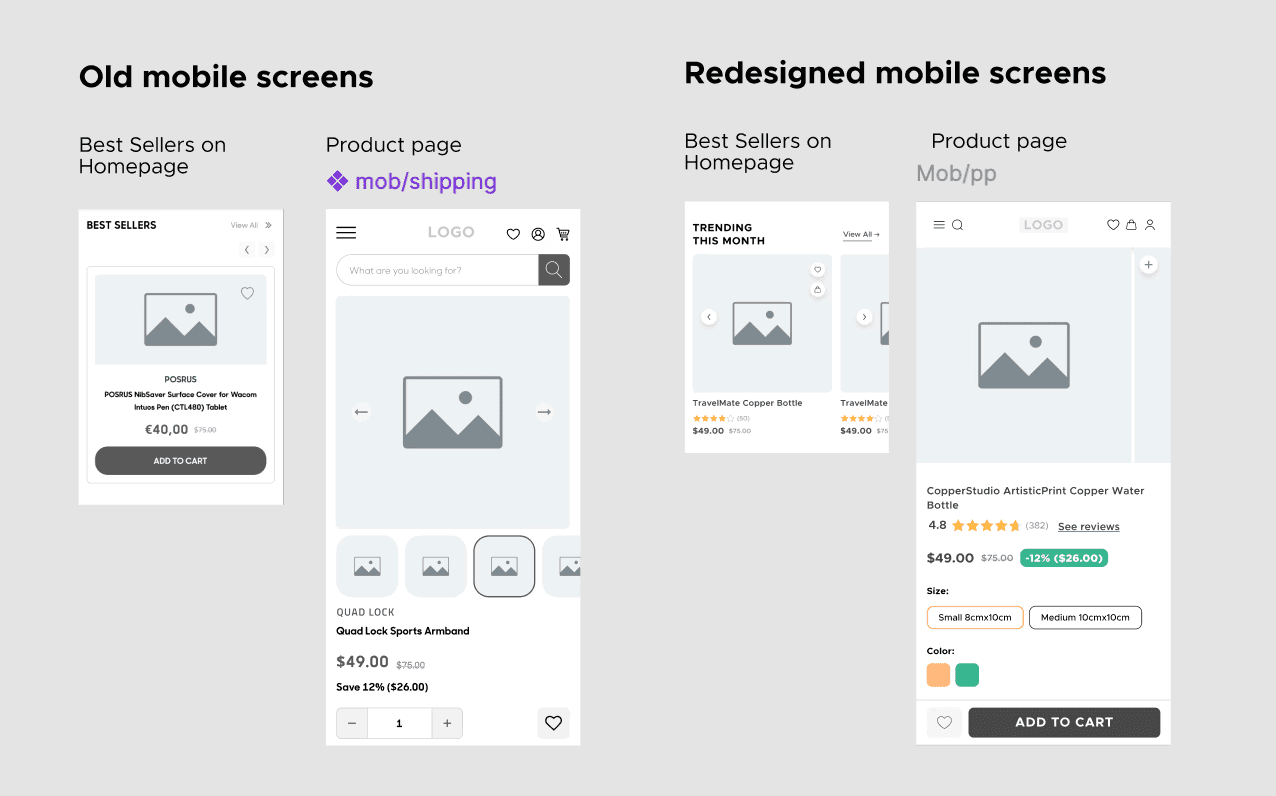
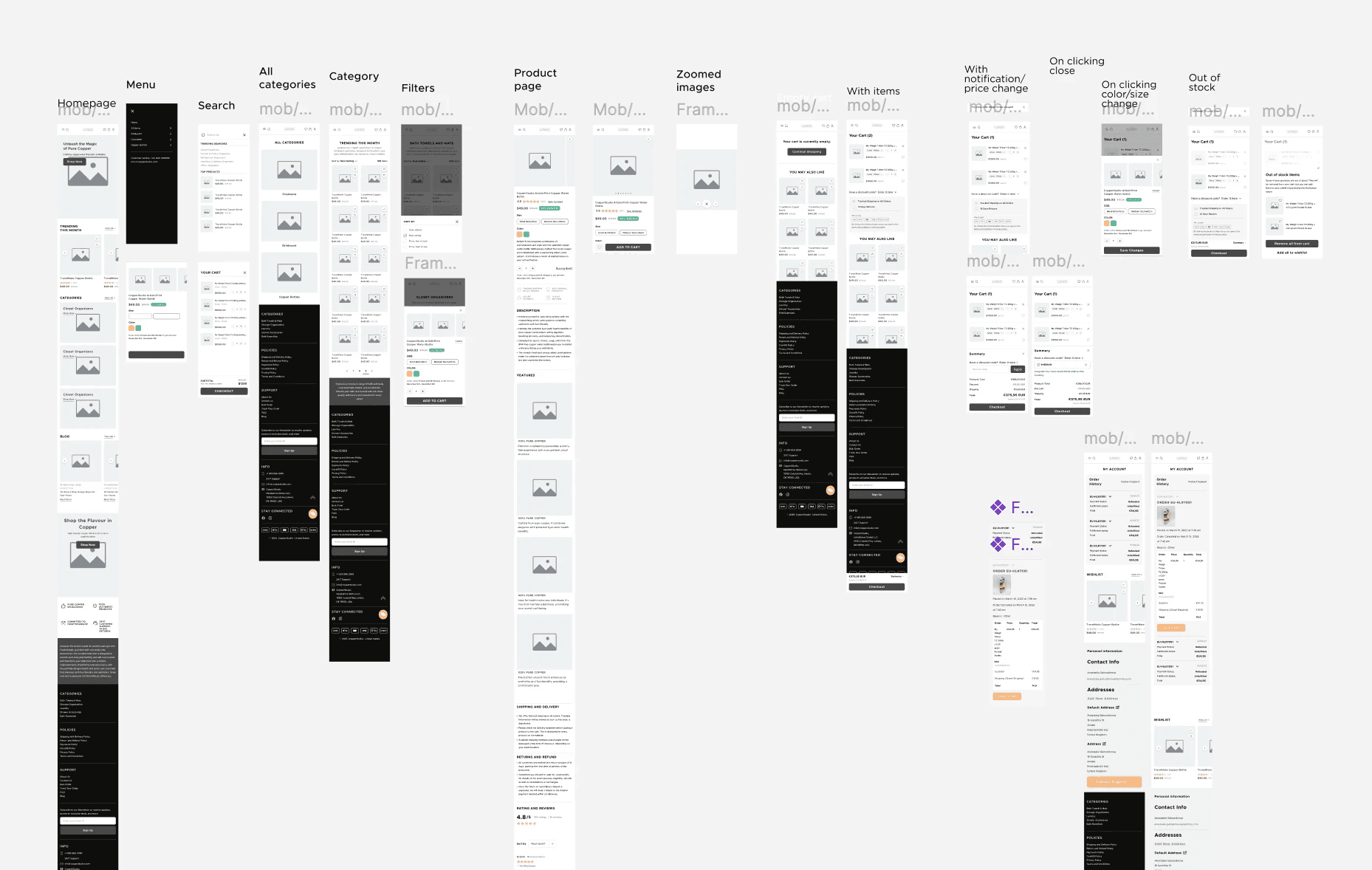
From the start, the system was engineered for mobile-first experiences.
Every layout was tested across breakpoints, ensuring typography, spacing, and interaction patterns scaled seamlessly.
Accessibility considerations — such as contrast ratios and tap target sizes — were built into the base tokens, not treated as afterthoughts.
Applied Across Brands
Applied Across Brands
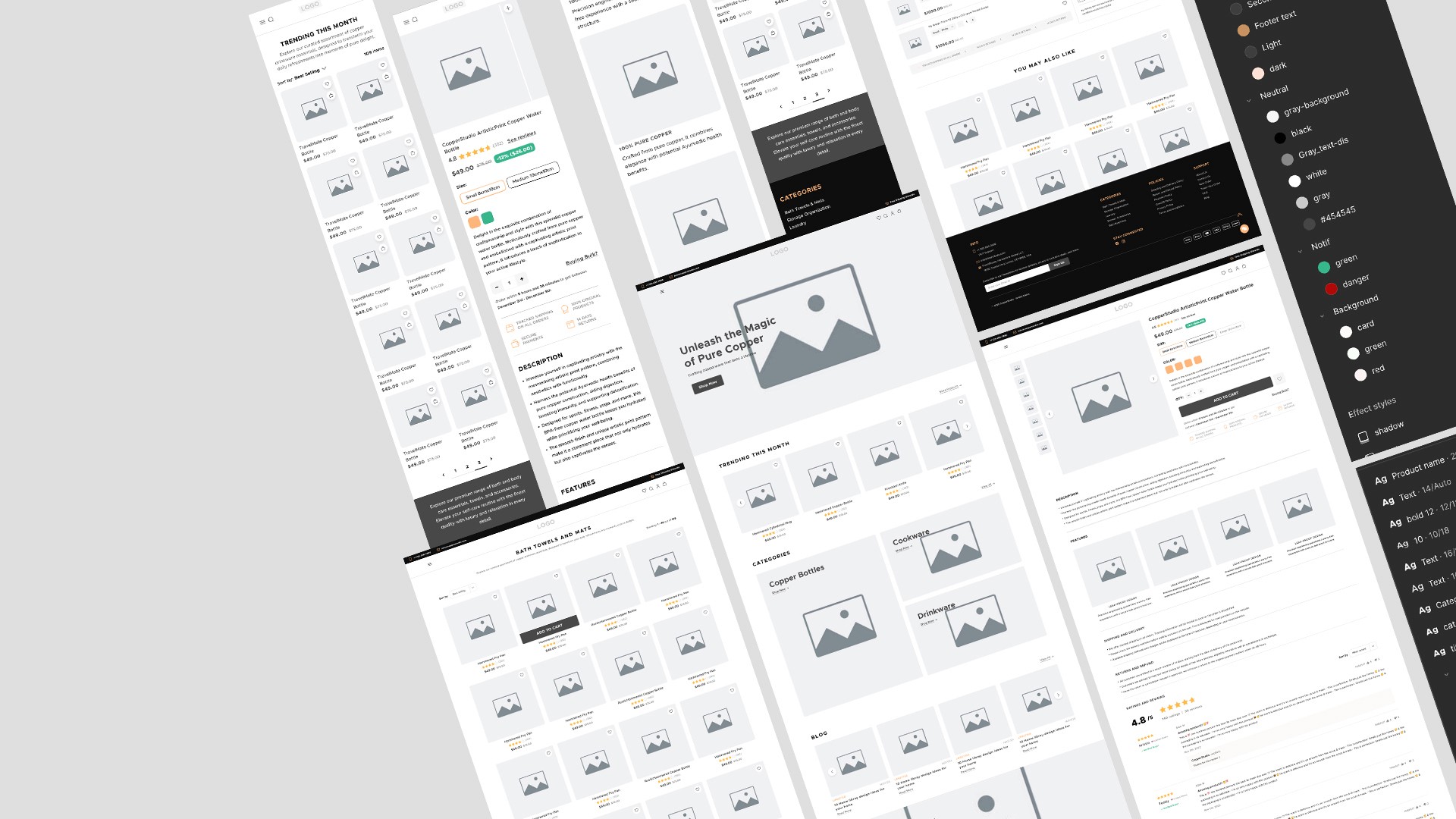
The design system was first implemented in the CopperStudio website redesign, bringing a refined and cohesive digital presence to the premium kitchenware brand. Later, it was reused for Fresh Rituals, a bath & body label, where the same system took on a lighter, more playful visual tone.
This proved the system’s flexibility — one foundation powering several contrasting identities.
Impact & Outcomes
Impact & Outcomes
Reduced design-to-development handoff time by 30%.
Enabled faster brand launches using pre-built component libraries.
Created a consistent, mobile-responsive foundation across the entire brand ecosystem.
Established a living design language now used as the baseline for future Handelnine brands.
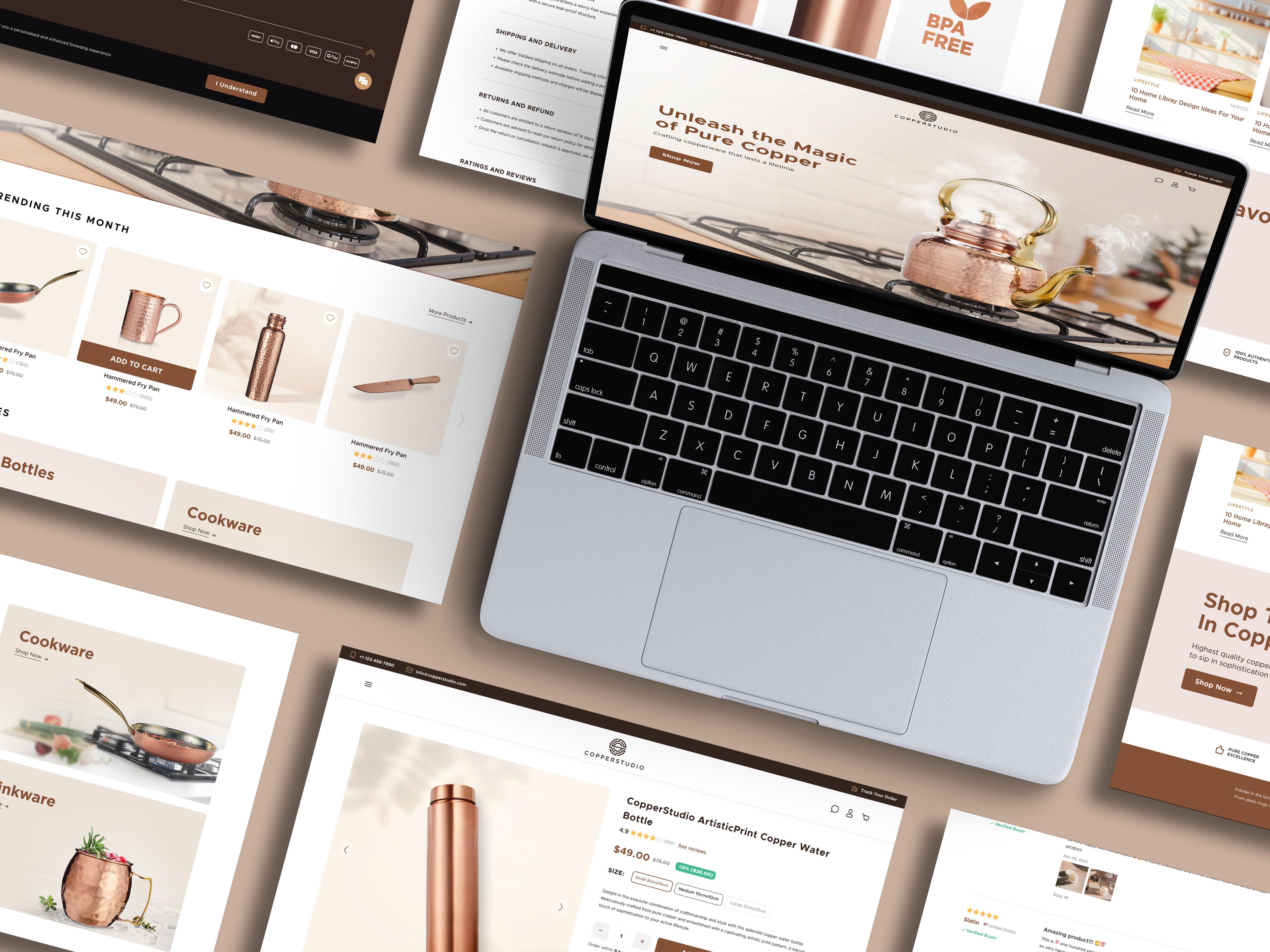
See how this system came to life in the CopperStudio website redesign
2024
One System, Many Personalities: Designing for Brand Variety at Scale
Handelnine Global is a growing house of private label brands, each with its own unique identity but a shared commitment to quality and design. Built a scalable, mobile-first design language for a multi-brand ecosystem for these brands.
Scalable Design System
Mobile-first
Overview
As Handelnine Global expanded its portfolio of in-house brands, each grew its own visual style — and with it, a web of inconsistencies.
I led the creation of a unified design system that could scale across brands while allowing each to retain its personality. The result was a flexible, token-based system that streamlined development, improved brand coherence, and accelerated new product launches.
The Challenge
Each brand team had built interfaces independently, resulting in repeated patterns, disconnected color logic, and mismatched typography.
The inconsistency slowed down development and diluted the parent brand’s visual integrity.
The challenge was to create a shared design language that felt unified under one system — yet adaptable enough for brands with contrasting aesthetics.
Goals & Objectives
Consistency
Establish a single, scalable design system for all brands
Flexibility
Design components that can flex across brands without duplication
Mobile-First
Prioritize mobile responsiveness and accessibility
Scalability
Streamline handoffs between design and development teams
Process
Audit
Define Tokens
Build Components
Brand Implementation
I began with a full audit of existing interfaces, analyzing patterns, redundancies, and inconsistencies. From there, I defined a clear hierarchy of foundations → components → brand variants.
The system was built around design tokens to manage color, typography, spacing, and elevation. These tokens acted as the connective tissue, ensuring every brand maintained consistency without feeling identical.
Design Foundations
Applying Atomic Design Principles to create components for our system.
The Design System is based on the following set of principles to help designers make informed choices about how to approach a project:
Components and Patterns
I built out modular components — buttons, forms, navigation, product cards, modals — all governed by the same token logic. Each component was designed to be theme-agnostic, with color and type overridden at the brand level.
Multiple brands could share identical structural components, yet look entirely distinct through customized palettes and imagery.
Responsive by Design
From the start, the system was engineered for mobile-first experiences.
Every layout was tested across breakpoints, ensuring typography, spacing, and interaction patterns scaled seamlessly.
Accessibility considerations — such as contrast ratios and tap target sizes — were built into the base tokens, not treated as afterthoughts.
Applied Across Brands
The design system was first implemented in the CopperStudio website redesign, bringing a refined and cohesive digital presence to the premium kitchenware brand. Later, it was reused for Fresh Rituals, a bath & body label, where the same system took on a lighter, more playful visual tone.
This proved the system’s flexibility — one foundation powering several contrasting identities.
Impact & Outcomes
Reduced design-to-development handoff time by 30%.
Enabled faster brand launches using pre-built component libraries.
Created a consistent, mobile-responsive foundation across the entire brand ecosystem.
Established a living design language now used as the baseline for future Handelnine brands.
See how this system came to life in the CopperStudio website redesign
2024
One System, Many Personalities: Designing for Brand Variety at Scale
Handelnine Global is a growing house of private label brands, each with its own unique identity but a shared commitment to quality and design. Built a scalable, mobile-first design language for a multi-brand ecosystem for these brands.
Scalable Design System
Mobile-first
Overview
As Handelnine Global expanded its portfolio of in-house brands, each grew its own visual style — and with it, a web of inconsistencies.
I led the creation of a unified design system that could scale across brands while allowing each to retain its personality. The result was a flexible, token-based system that streamlined development, improved brand coherence, and accelerated new product launches.
The Challenge
Each brand team had built interfaces independently, resulting in repeated patterns, disconnected color logic, and mismatched typography.
The inconsistency slowed down development and diluted the parent brand’s visual integrity.
The challenge was to create a shared design language that felt unified under one system — yet adaptable enough for brands with contrasting aesthetics.
Goals & Objectives
Consistency
Establish a single, scalable design system for all brands
Flexibility
Design components that can flex across brands without duplication
Mobile-First
Prioritize mobile responsiveness and accessibility
Scalability
Streamline handoffs between design and development teams
Process
Audit
Define Tokens
Build Components
Brand Implementation
I began with a full audit of existing interfaces, analyzing patterns, redundancies, and inconsistencies. From there, I defined a clear hierarchy of foundations → components → brand variants.
The system was built around design tokens to manage color, typography, spacing, and elevation. These tokens acted as the connective tissue, ensuring every brand maintained consistency without feeling identical.
Design Foundations
Applying Atomic Design Principles to create components for our system.
The Design System is based on the following set of principles to help designers make informed choices about how to approach a project:
Components and Patterns
I built out modular components — buttons, forms, navigation, product cards, modals — all governed by the same token logic. Each component was designed to be theme-agnostic, with color and type overridden at the brand level.
Multiple brands could share identical structural components, yet look entirely distinct through customized palettes and imagery.
Responsive by Design
From the start, the system was engineered for mobile-first experiences.
Every layout was tested across breakpoints, ensuring typography, spacing, and interaction patterns scaled seamlessly.
Accessibility considerations — such as contrast ratios and tap target sizes — were built into the base tokens, not treated as afterthoughts.
Applied Across Brands
The design system was first implemented in the CopperStudio website redesign, bringing a refined and cohesive digital presence to the premium kitchenware brand. Later, it was reused for Fresh Rituals, a bath & body label, where the same system took on a lighter, more playful visual tone.
This proved the system’s flexibility — one foundation powering several contrasting identities.
Impact & Outcomes
Reduced design-to-development handoff time by 30%.
Enabled faster brand launches using pre-built component libraries.
Created a consistent, mobile-responsive foundation across the entire brand ecosystem.
Established a living design language now used as the baseline for future Handelnine brands.
See how this system came to life in the CopperStudio website redesign